Home & Auto Insurance for Fallen Trees
With Fall upon us and Winter coming close behind, it is time to think about the storms ahead and the potential damage to your cars and home caused by falling trees. Fall & Winter storms can cause terrible damage alone and when trees are involved, it can be a costly situation.
Some common scenarios involving tree damage are:
- Trees damaging your vehicle
- Trees damaging your home

- Trees on your property have damaged a neighbor’s property
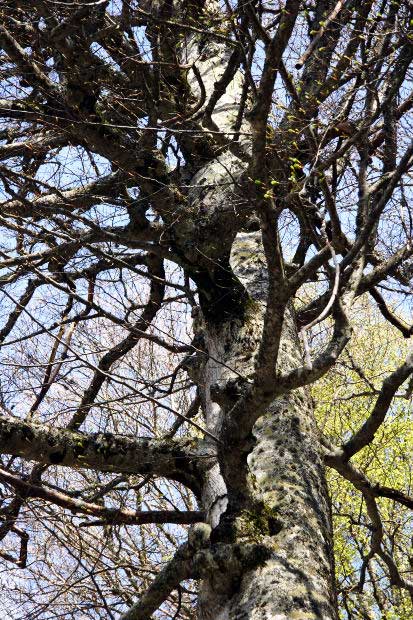
Let us take a look at the different insurance needs that may arise in the above situations and some advice on how to handle those situations.
Damage to your vehicle or your home
While parked lightning strikes and tree and a limb falls crushing the roof of your car…
If you have opted to have comprehensive (sometimes called “other than collision”) coverage as part of your auto insurance policy it will help to cover repairs or the replacement of your vehicle, up to your car’s actual cash value. If you do not have comprehensive coverage, you will be responsible for any repairs to your vehicle.
If the tree that fell on your car belongs to a neighbor, in many cases, you would likely still rely on the comprehensive coverage in your auto insurance policy.
Now if that same tree limb damaged your home or another structure, such as a shed, on your property you will be looking at your home policy to cover the damages. If the tree tree falls in your yard without causing property damage, you’ll be left to pay out of pocket to clean it up.
Whether the claim is made on your auto or home insurance policy you will be responsible for your deductible.
Steps to Consider
What steps should you consider when a tree cause damage to your home or auto?
Every situation is different, the best thing to do is always to give your agent a call and let them know about your particular situation. Once they are able to assess your situation, they can walk you through the process.
 Once a claim has been opened, an investigation will be conducted and you will be provided information on how to obtain an estimate for the repairs.
If your loss is covered, you will receive a check to cover the repairs, or your insurer may pay the repair shop or contractor directly. In either case, you should expect to pay your deductible first. You should also be aware that an insurance company will not pay for repairs that cost more than a vehicle is worth. Extreme damage could mean that your car is deemed a total loss, in which case your insurer will pay you (or your lease or lien holder) up to your car’s actual cash value, minus your deductible.
If you are unable to reside in your home due to damages and it is considered uninhabitable you may have coverage under loss of use coverage, to provide for additional living arrangements and expenses while repairs are being made.
For your car, if you have substitute transportation and towing coverage you may be able to set up these services at the same time a claim is started.
Have you reviewed your car and home insurance coverages lately? A tree falling onto your home or auto is just one situation that is fairly likely to occur in your life. Checking your coverage is a way of making sure you’re prepared for whatever life may bring your way.
Steps for prevention
There is one notable exception to the rule regarding the responsibility of a fallen tree. This exception involves un-neighborly negligence.
As a homeowner, it is your responsibility to maintain your property, including your trees, to ensure that any dead limbs or dead trees are cut off or cut down.
A professional arborist can analyze the tree to see if it needs any special treatments, pruning or complete removal. This may seem like an unnecessary expense, but it is much less expensive than the potential cost of  paying for a neighbor’s home being destroyed and the legal costs that ensue.
If your neighbor’s tree rotted out or otherwise has become a hazard, and you can document that you asked that it be addressed, your insurer may not need to pick up the tab for damages and cleanup and you can avoid filing a claim against your own policy. It will help your case if you have photos of the problem tree, a copy of your letter requesting its removal sent by certified mail, and an assessment by a trained arborist to support your counter-claim.
A final thought
Your neighbor may not have adequate coverage, or he may have a deductible he has to pay before his insurance takes effect. In these cases, you may be asked to pay the deductible or the extra cost of repair. If you don’t, you can be brought to small claims court or have a civil suit filed against you to recover damages. If you’re confident your tree was healthy and you weren’t at fault you might risk the suit, you could however permanently damage your relationship with your neighbor and face years of acrimony.
If it is your neighbor’s tree that concerns you, you may want to assess the damage, provide them with estimates to remediate the issue and you may even want to offer to pay for a portion of the costs. A small expenditure up front even if it is not your responsibility may prevent many headaches in the future and it may just be the neighborly thing to do.
For those who plan to stay in their homes for any length of time, it is best to try to keep peace with neighbors preventing quarrels or ongoing problems if at all possible.
More questions about the coverage on your home or auto insurance policy? We would be happy to answer those. Give us a call at 888.865.1244.
Read More
Recent Comments